How to feed Pheidole pallidula
Pheidole pallidula has two clearly visible castes: many small workers and big-headed soldiers that cut up food.
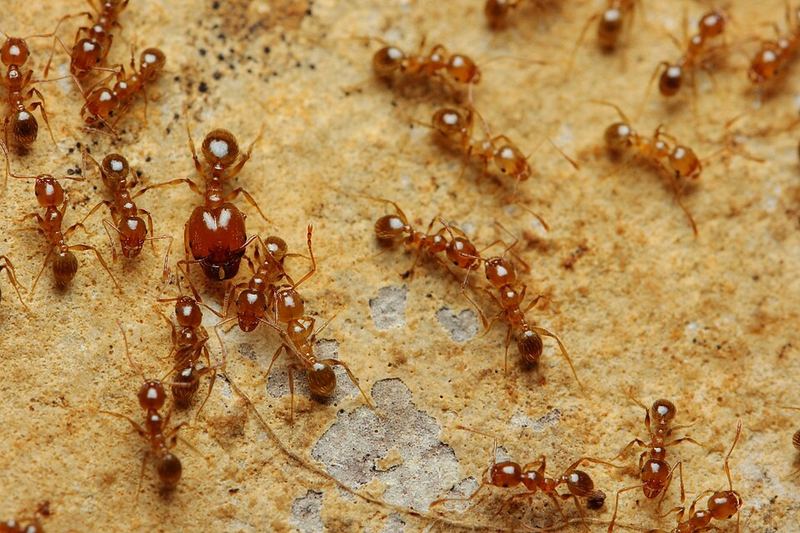

What does Pheidole pallidula eat?
- Protein: chopped or whole prey (crickets, flies): the soldiers cut it up.
- Seeds: it accepts small seeds (chia, dandelion) as a supplement.
- Sugar: sugar water or diluted honey, refreshed regularly.
How much to feed
Guidelines for a colony with a moderate amount of brood, at 22–28 °C (72–82 °F):
| WORKERS | PROTEIN | SUGAR / 3–4 DAYS | SEEDS |
|---|---|---|---|
| 10 (Nanitics) | 1 prey item every 5 days | 1 drop | 0.1 g / week |
| 50 (Small) | 5 prey items every 4 days | 2 drops | 0.1 g / week |
| 150 (Growing) | 14 prey items every 3 days | 6 drops | 0.2 g / week |
| 400 (Established) | 34 prey items every 3 days | 15 drops | 0.6 g / week |
1 prey item = one insect the size of a fruit fly (2–3 mm). A medium cricket (1 cm) is worth about 50 prey items. 1 drop ≈ 0.05 mL. Seeds: 1 g ≈ 170 millet seeds ≈ 750 chia seeds; 1 teaspoon ≈ 4 g.
These are starting points. If food is left after 24 h, give less; if everything disappears fast and the brood grows, give more. The calculator also adjusts for brood and temperature.
Hibernation
Light hibernation from December to February, around 10–12 °C (50–54 °F).
Common mistakes
- Underestimating protein needs: soldiers are expensive to raise.
- Using badly sealed tubes: the tiny workers get through anything.
- Leaving leftovers: populous colonies produce waste fast.
FAQ
What are Pheidole soldiers for?
Cutting up prey, defending the nest and sometimes storing food.
Does Pheidole eat seeds?
Yes, as a supplement to insects and sugar.
How do Pheidole escape?
Through the smallest gaps: tiny workers. Use an escape barrier (paraffin oil, talc).
Amounts and timings are average guidelines, not rules. Always adjust to what you see in your own colony (leftovers, appetite, brood).